
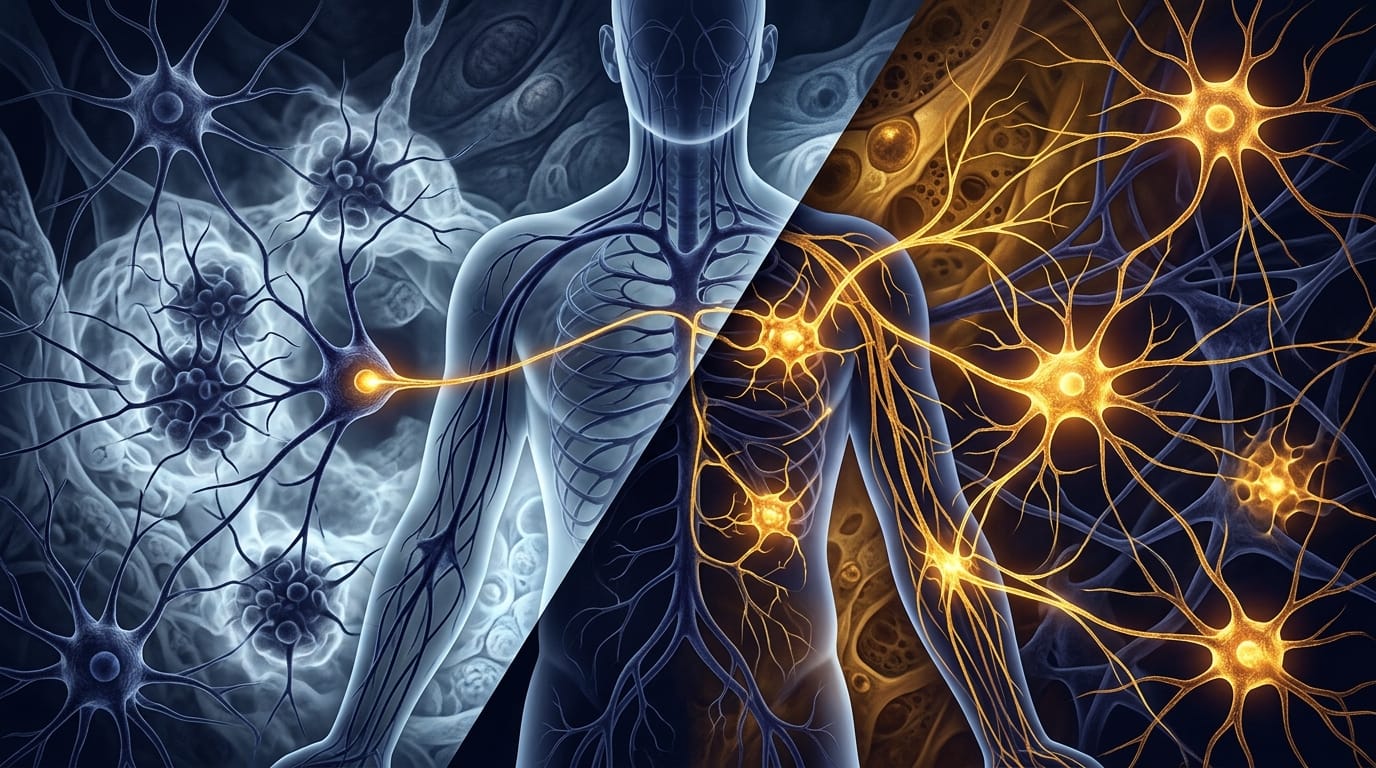
Depression is relentless, a weight that settles in the mind and body, and for millions, current treatments simply don't offer enough relief. Pills help some, therapy helps others, but for a significant number of people, the search for effective help continues. This isn't just a mental health crisis; it's a profound challenge to our understanding of the human body and how to heal it. An ancient practice, often dismissed by modern medicine, may hold a key to unlock more personalized, effective relief. What if it works not just on the mind, but on the interwoven systems that drive our entire well-being?
Acupuncture, a cornerstone of Traditional Chinese Medicine for thousands of years, has long been applied to mental and emotional disorders. For much of that history, its mechanisms remained a mystery to Western science, often confined to the realm of anecdotal evidence. But now, with advanced tools, researchers are peeling back the layers, revealing a deep biological sophistication.
This means we are starting to understand how acupuncture doesn't just treat symptoms, but acts on fundamental systems within us. A recent study by Zhou, Binbin and colleagues proposes a crucial perspective: acupuncture's effects on depression are best understood through what scientists call "immuno-metabolic-neural coupling."
This might sound like a mouthful, but the concept is remarkably intuitive. It describes the constant, intricate conversation happening between your immune system, your metabolism (how your body uses energy), and your nervous system. Think of it like a complex symphony: if one section is out of tune, the whole performance suffers. For too long, we often thought of depression as solely a brain problem, a chemical imbalance solved by targeting neurotransmitters. The consequence of this narrow view is that it leaves many people without answers when those solutions fail.
The reality, as this research highlights, is far more integrated. Chronic inflammation, imbalances in your gut microbiome, or disruptions in how your body processes energy can all ripple through your system, affecting your brain and driving depressive symptoms. This shift in thinking is a significant step beyond the traditional monoamine hypothesis, which focused mostly on brain chemicals. This holistic view suggests that mental illness isn't just in your head; it's a full-body experience rooted in these deeply interconnected systems.
So, how does acupuncture fit in? Researchers now employ sophisticated tools to track its effects. Functional MRI scans map neural activity. Biochemical assays measure cytokines (immune system messengers), hormones, and neurotransmitters. Advanced "omics technologies—like genomics, proteomics, and metabolomics—analyze everything from your genes to your gut microbes. These techniques allow scientists to precisely characterize how acupuncture influences these immune, metabolic, and neural systems. They can see, for instance, how specific acupoints might dampen inflammation, improve metabolic markers, or rebalance neural network patterns.
This isn't about proving acupuncture "works in a general sense; we have growing clinical evidence for that. Instead, it's about understanding how it works at a granular, biological level. It’s a challenge, of course. The multi-systemic nature of acupuncture's effects makes isolating specific pathways complex. Questions about the exact specificity of acupoints, the generalizability of findings, and the role of placebo effects still require rigorous, reproducible research. These are not reasons to dismiss the approach, but calls for more precise scientific inquiry.
The real game-changer lies in "precision treatment prospects." This means moving beyond a one-size-fits-all approach to acupuncture. Imagine tailoring acupuncture interventions based on your unique biological profile. This could involve identifying specific biomarkers—like your genetic predispositions, inflammatory signatures, or even the composition of your gut microbiome—that predict how you will respond to different acupuncture protocols.
This future isn't far-fetched. This personalized medicine paradigm aims to optimize everything: the choice of acupoints, the intensity of stimulation, and how often you receive treatment. It means integrating acupuncture with other therapies to achieve the maximum benefit for your specific subtype of depression.
The goal is a future where treatment for depression is as individual as you are, where the ancient wisdom of acupuncture meets the cutting-edge science of systems biology. This work points towards a path where we stop guessing and start targeting the real biological drivers of depression, allowing more people to find real relief. It demands continued research and thoughtful integration into our healthcare conversations.
The consequence is a path to more effective, personalized care for millions. It calls on us to support the research that will turn this potential into practice, unlocking new avenues for healing. ◆
Sourced from: ["[Multidimensional regulation and precision therapeutic prospects of acupuncture against depression from the perspective of immunity-metabolism-nerve coupling]."](https://doi.org/10.13702/j.1000-0607.20251408) by Zhou, Binbin, Chen, Yongjun, and Xia, Yucen