
Imagine trying to bake a cake, but you only have half a recipe and no idea what the finished cake should look like. When trying to design new proteins, the microscopic workhorses that make our bodies function, scientists face a challenge much like baking a cake with only half a recipe. Every process, from digesting food to fighting off disease, relies on proteins doing their job. They are long chains of chemical building blocks called amino acids, and the order of these amino acids—the sequence—determines how the protein folds into a specific three-dimensional shape—its structure. This shape is everything; it dictates what the protein can do. When a protein folds incorrectly, it can’t perform its role, and this misstep is often at the root of many serious diseases.
For decades, understanding the precise link between a protein's recipe and its final form has been a central quest in biology. The ability to design new proteins with specific functions from scratch would open incredible doors for drug discovery and engineering new biological tools. Artificial intelligence holds enormous promise for this challenge. These AI systems, often called Generative Models, learn patterns from existing data to create new, never-before-seen examples. In the world of proteins, this means an AI could invent a new amino acid sequence that folds into a desired structure, or vice versa.
The typical way these generative models have been built for protein design involves a series of steps. Think of it this way: first, you’d feed the AI a vast amount of existing protein data. The AI would then try to compress all that complex information—both the amino acid sequence and the structure—into a more abstract, simplified internal code. Researchers often call these abstract data codes or latent representations. Only after this initial compression step would a separate part of the AI then learn how to generate new proteins using these simplified codes. This is what's known as a multi-stage training process, where the AI learns one thing, then another, in sequence. It's a bit like teaching a child to read by first having them learn a code for every letter, and then teaching them how to read full words using that code. While effective to a degree, it adds complexity to the AI's learning.
Now, a new approach has emerged that streamlines this entire process. A team including Jiarui Lu and colleagues, presenting their work in a preprint appearing on arXiv, developed a system called SimpleDesign. This model introduces a more direct path to understanding how protein sequences and structures relate to each other. The key thing to understand here is that SimpleDesign doesn't bother with those intermediate abstract codes. Instead, it learns directly from the original, raw protein information—what researchers refer to as working in the data space. This means it bypasses the need to convert everything into a simplified code first, making the AI’s development much more straightforward.
SimpleDesign’s innovation lies in its ability to directly understand and generate both the amino acid order and the three-dimensional shape of proteins simultaneously. This is what we mean by a multi-modal relationship—the AI deals with different types of data (the linear sequence and the spatial structure) at the same time, understanding how they influence each other. To achieve this, SimpleDesign uses a single-stage, end-to-end objective during its training. This means it has one unified learning goal throughout its process: to simultaneously optimize for generating the correct protein sequence and the accurate three-dimensional structure. It’s like teaching the child to read the full words directly, associating the letters with their meaning and pronunciation all at once.
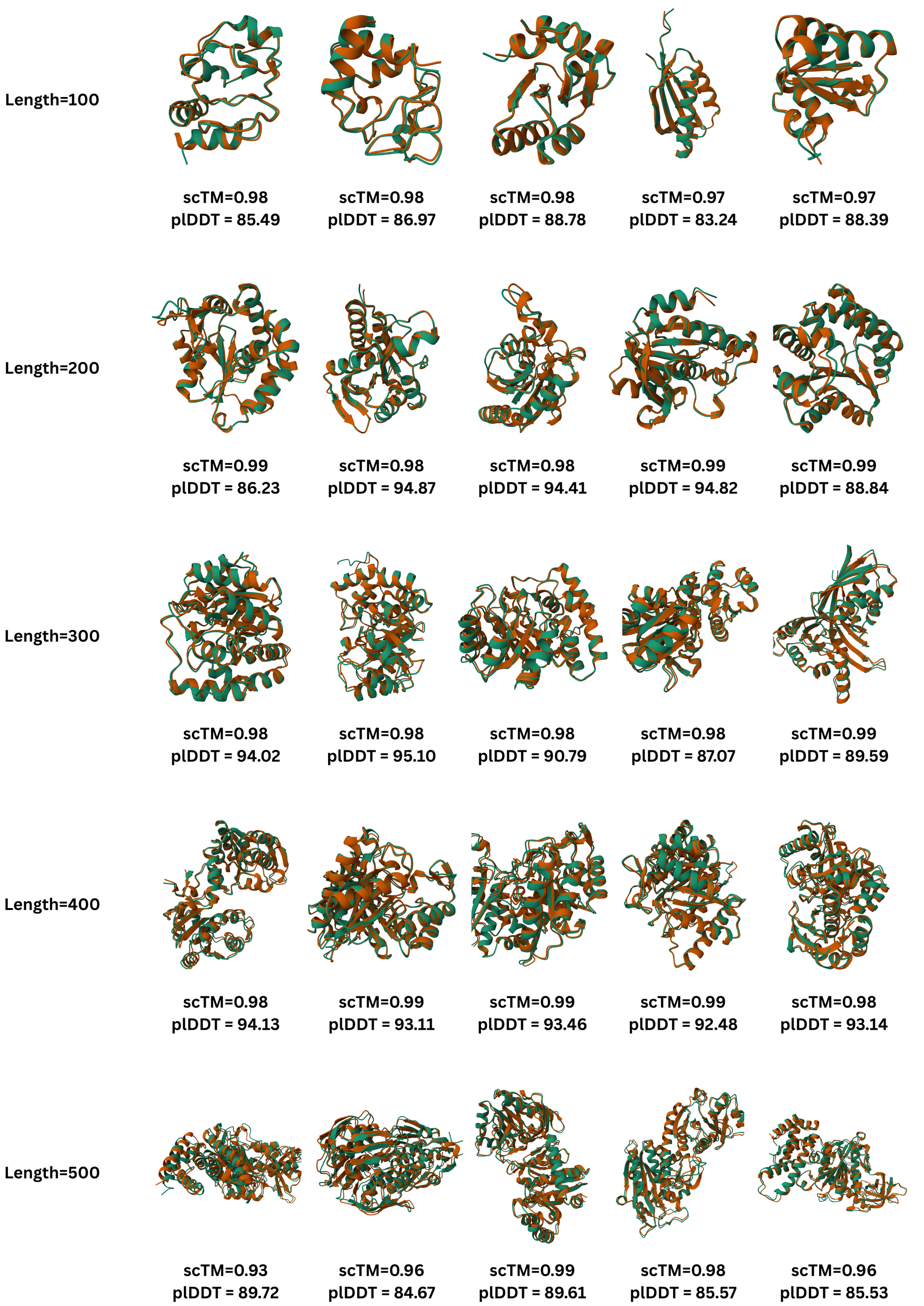
To manage these different kinds of information while keeping their connection clear, SimpleDesign employs an adaptable AI design known as a Mixture-of-Transformer architecture. This sophisticated setup allows the model to process details specific to either the sequence or the structure, while also making sure it maintains a global understanding of how these two parts connect. The model learned from an enormous dataset: over two million pairs of protein sequences and their corresponding structures. This extensive training helps it grasp the intricate rules governing protein architecture. For sequences, the model measures how well it predicts the correct amino acids. For structures, it measures how accurately it predicts the precise atomic positions in three dimensions. The goal is to get both measurements as accurate as possible, all at once.
The implications of this direct, simultaneous learning are profound. By designing proteins with this combined approach, we move closer to creating stable, functional proteins that can integrate effectively into the incredibly complex environment inside our cells. For example, the body has sophisticated systems, like the ubiquitin-proteasome system, that constantly monitor and manage proteins, ensuring they fold correctly and get rid of damaged ones. Designing new proteins that can not only achieve a desired function but also exist harmoniously within these cellular quality control networks is a significant leap. This direct understanding of the multi-modal relationship between sequence and structure also gives us a powerful new tool to study diseases. Many illnesses, including neurological disorders, are rooted in proteins with misfolded structures or altered sequences. With SimpleDesign, we might be able to better understand exactly how a genetic change leads to a malfunctioning protein, paving the way for designing therapeutic proteins that could correct these issues. The future could bring custom-made biological tools, precisely shaped to perform a specific task, directly addressing the challenges within our cells. ◆
Sourced from: "SimpleDesign: A Joint Model for Protein Sequence and Structure Codesign" by Jiarui Lu et al.