

In the faint shimmer of its earliest stars, the universe holds its oldest secrets, bodies born from a cosmos still raw, uncomplicated by heavy elements. To find them is to sift through billions of years of cosmic history, to peer across distances so vast that the light we gather today began its journey when the universe itself was barely past infancy. These rare stellar fossils, known as bright metal-poor stars, are not just distant lights; they are time capsules, preserving the chemical makeup of the nascent universe before successive generations of stars began forging the elements that now comprise planets, and all living things.
For decades, the search for these stars has been a painstaking endeavor, often requiring immense telescope time and careful, individual observation. The challenge lies in their rarity and the subtle chemical signatures that mark them as truly ancient. What distinguishes these stars, fundamentally, is their extremely low metallicity—a measure of elements heavier than hydrogen and helium present within them. The very first stars contained almost nothing but hydrogen and helium; subsequent generations slowly enriched the cosmos with elements like carbon, oxygen, and iron. To find stars with the lowest metallicity is to discover those closest to the universe’s beginning.
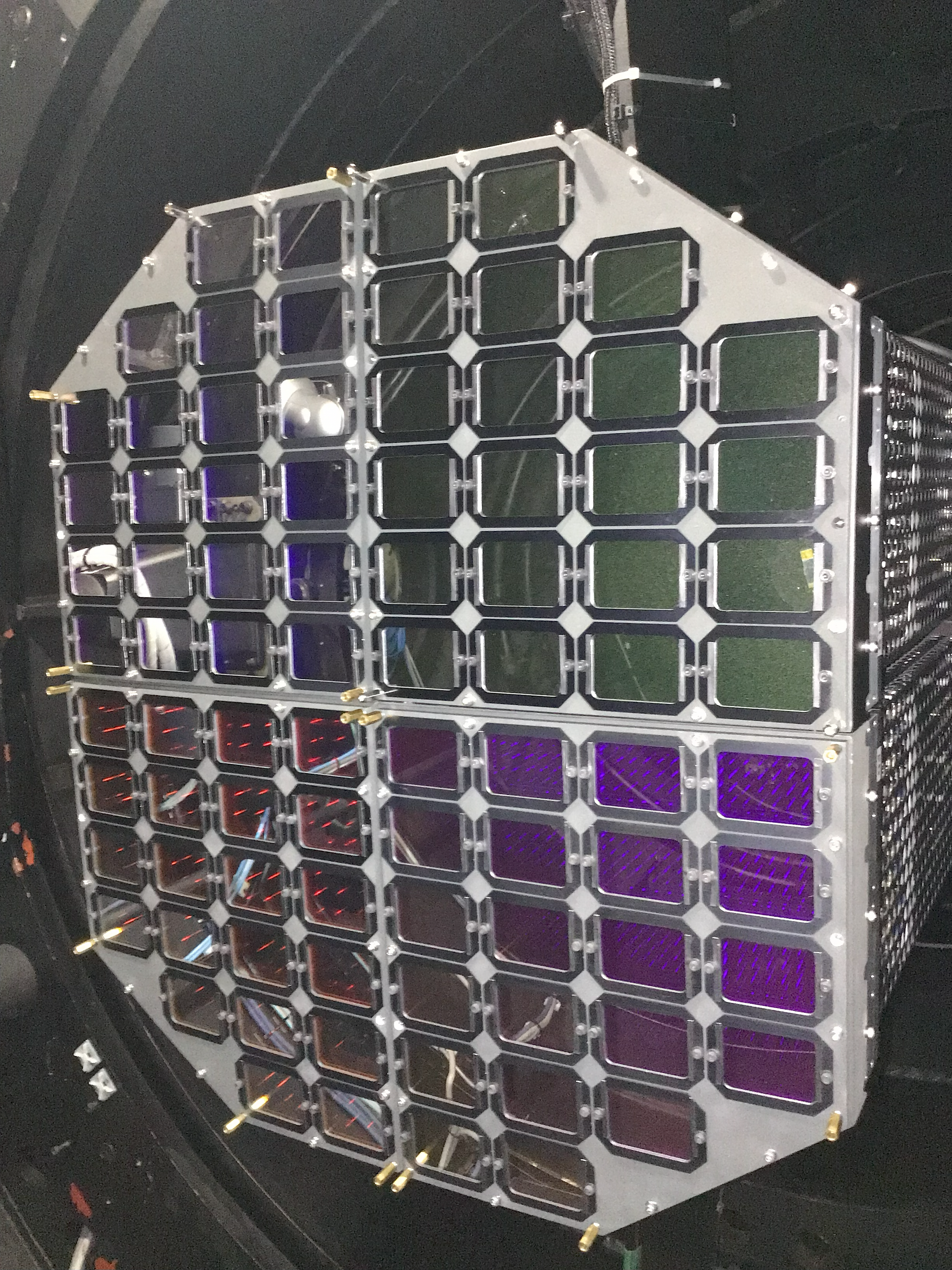
A new wide-area effort, called the Tomo-e Gozen Bright Metal-Poor Star Survey, has refined this search, focusing its attention on the subtle variations in starlight. Using a specialized camera named Tomo-e Gozen on the Kiso Schmidt telescope, researchers conducted a narrow-band photometric survey. Imagine observing the world not just through a few broad color filters, but through very specific, thin slices of the rainbow, each designed to highlight the unique chemical fingerprints left by particular elements. This careful, selective filtering allows for the efficient initial identification of stars with the low metallicity that marks them as ancient.
This initial survey method combines these specific light measurements with existing broader observations of stars, and crucially, with the extraordinarily precise distances measured by the European Space Agency’s Gaia mission. Gaia, observing nearly two billion stars, provides an unparalleled three-dimensional map of our galaxy, giving astronomers the precise locations and motions needed to understand these rare stellar populations. By integrating these different streams of data, the survey estimated fundamental stellar properties: effective temperature, which describes a star’s surface heat; surface gravity, indicating its density; its metallicity; and its carbon abundance, or the amount of carbon present in the star.
To validate these initial estimates, a second, more focused step followed. The team, including Hiroko Okada and Takumi Iwasaki, performed a medium-resolution spectroscopic follow-up using an instrument called Nayuta/MALLS. When a star's light passes through a spectrograph, it is split into its constituent wavelengths, much like a prism separates white light into a spectrum. Within this spectrum appear dark lines, each a specific barcode indicating the elements present in the star's atmosphere. Medium-resolution spectroscopy captures these lines with enough detail to confirm the chemical composition suggested by the earlier photometric measurements. The results of this careful process, detailed in a preprint appearing on arXiv, show these spectroscopic metallicities are consistent with more detailed high-resolution measurements.
The precision of this two-stage approach allows for particular confidence in the findings. When compared against established stellar abundances derived from even more detailed, high-resolution spectra, the typical scatter for metallicity estimates from the survey was less than 0.3 dex. For carbon abundance estimates, this scatter was less than 0.4 dex. (A "dex here represents a logarithmic measure of difference, meaning these estimates are consistently close to the values derived from the most rigorous methods.) This level of consistency suggests the survey’s measurements are strong predictors of a star's true elemental makeup.
Through this meticulous work, the survey estimated metallicities for approximately 1.7 million stars. From this vast sample, it identified about 16,000 very metal-poor candidates, those stars whose metallicity measures less than a specific threshold that marks them as truly ancient. These newly found candidates represent a significant leap forward. They are the ideal targets for future high-resolution abundance studies, which will examine their chemical makeup with even greater scrutiny, seeking out the minutest traces of elements that can tell us about the very first nuclear reactions in the universe. The careful attention paid to the structure of starlight, filtering it by wavelength, measuring its distance, and then dissecting its spectrum, has brought us closer to understanding the universe’s earliest moments. Each of these ancient stars is a whisper from a time when the cosmos was young and pure, a light that travels billions of years to reach our instruments, illuminating the slow, deliberate process by which the universe became what it is now. These findings remind us that the world is an older, stranger place than we often imagine, and in the deep cosmic past, there is still much light to uncover. ◆
Sourced from: "Bright Metal-Poor Star Survey - I. Tomo-e Gozen narrow-band photometric survey and medium-resolution spectroscopic follow-up" by Hiroko Okada et al.