
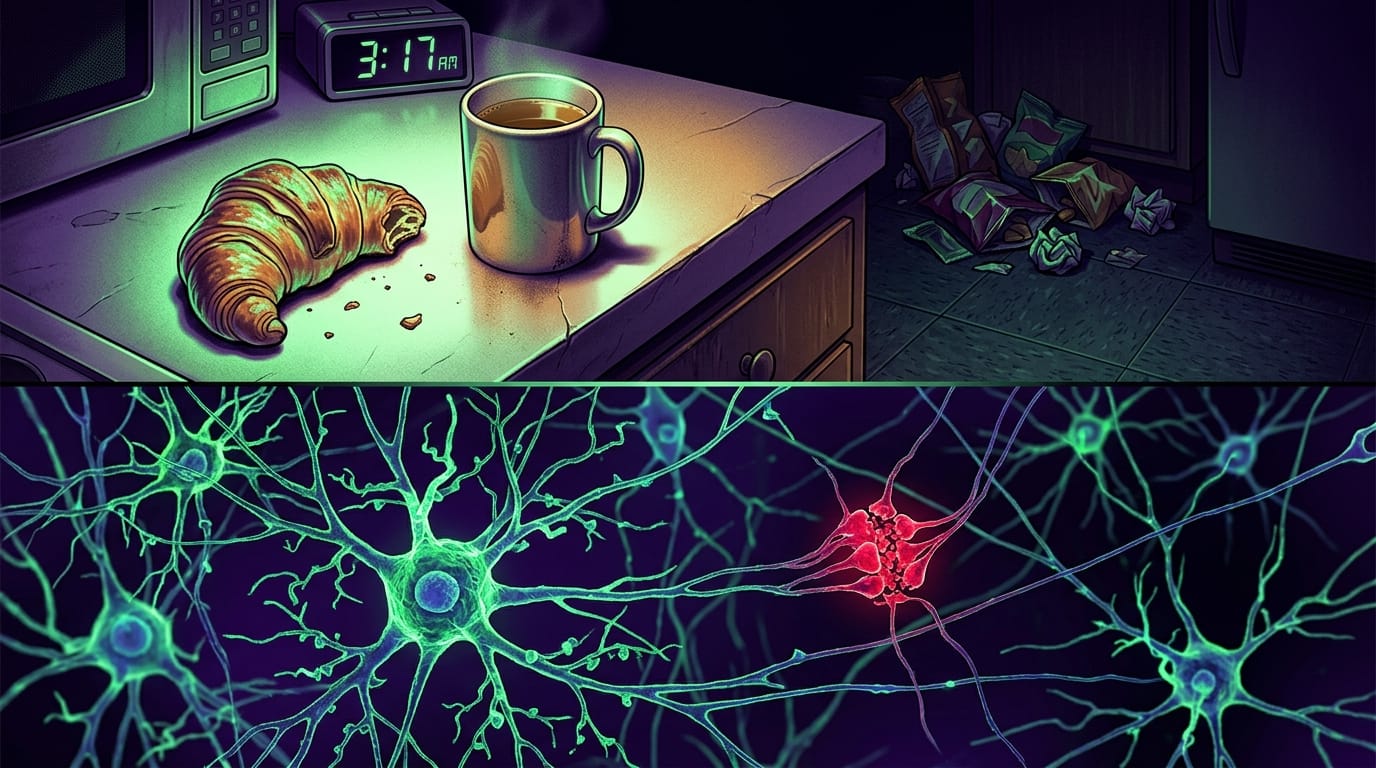
For many, the late-night snack attack isn't just a lapse in willpower; it's a biological command. You’re tired, your eyelids heavy, but suddenly that bag of chips or tub of ice cream calls to you with an irresistible siren song. It’s a familiar scenario for millions, a puzzle for anyone trying to eat healthier. The urge wasn’t about moral failure, but about the very rhythms governing your sleep. For Diana Merimskaia, this question became a central obsession. She and her colleagues weren't just curious about why we sometimes eat badly, but specifically why sleep disruption seems to drive us toward sweet and refined carbohydrate foods. They understood the stakes: in a world grappling with rising obesity rates, disentangling the invisible threads between our body clocks, our sleep, and our dietary choices could open entirely new pathways to health.
Pinpointing that connection, however, proved complex. Researchers for years had studied general hunger or appetite, but zeroing in on cravings – that distinct, intense desire for a specific food – for sweet things presented a tougher challenge. The terms used to measure these cravings weren't consistent across different studies. The methods varied wildly, and often, researchers looked at cravings in a broad sense, not specific to a sugar-laden treat or a starchy snack. Merimskaia and her colleagues recognized this fragmentation as an obstacle to real understanding. They saw a scattered landscape of small experimental studies, many observational in design, meaning they could show associations but not definitively prove that poor sleep caused the cravings.
So, Merimskaia decided to tackle the problem with a different approach. Instead of conducting new experiments, her team chose to synthesize what was already known. They set out to review a vast body of existing research, systematically searching databases like PubMed, Scopus, and Web of Science. Their focus narrowed to English-language human studies published between January 2021 and August 2026, also including foundational papers to give historical depth. They wanted to find a clearer, more unified picture of how sleep patterns, the body's internal clocks, and even meal timing might be connected to that powerful pull toward sweet and starchy foods.
As they sifted through the evidence, a pattern began to emerge. Merimskaia and her team confirmed a clear link: disruptions to our sleep and our internal body clocks are tied to a greater urge for sweet and highly appealing foods. They found that when people slept less, it literally changed the chemical messages flowing through their bodies. Hormones that regulate appetite, like ghrelin (which makes you feel hungry) and leptin (which tells your brain you’re full), shifted out of balance. This meant the body was getting signals to eat more, and specifically, to seek out those rewarding, energy-dense foods.
The story wasn't just about hormones, though. The brain itself seemed to get in on the act. Restricted sleep appeared to dial up the reward response in parts of the brain when people saw or thought about appealing foods. It was as if a tired brain became more vulnerable, more likely to succumb to the lure of a sugary treat. Researchers even developed sophisticated tools, like an fMRI-based "Neurobiological Craving Signature," to literally see these craving signals light up shared brain circuits for food, social connection, and even drug cravings. This showed a deep, fundamental connection in how our brains process desire.
These connections extended far beyond the lab. The review highlighted how real-world sleep disruptions like working irregular shifts, or what people sometimes call social jetlag – when your weekend sleep schedule clashes with your weekday one – and even eating meals late at night, were associated with less healthy diets and an increased sense of hunger. Yet, the path to understanding remained twisty. The hormonal responses to sleep restriction weren't always consistent across different experimental setups, or even between genders and different groups of people. Many studies still broadly addressed hunger or general highly palatable food intake, not the specific nuances of a yearning for a cookie. Small sample sizes in some experiments also meant the findings needed careful interpretation. And while observational studies revealed strong associations, they couldn't always draw a direct arrow from "bad sleep to "craving that doughnut." For instance, earlier thinking suggested emotional eating might be the main reason poor sleep leads to overeating, but newer evidence suggested that the direct impact of sleep quality on overall energy and fat intake was often more significant.
Despite these complexities, Merimskaia and her colleagues identified a powerful truth: our sleep dictates more than just our alertness. It fundamentally influences our food choices, driving us toward specific types of foods that contribute to poor health. This led them to propose an "integrative framework," a way to connect the body's basic needs for energy balance, the brain’s systems for seeking reward, and our everyday eating behaviors. This framework provides a crucial roadmap for future studies, helping researchers understand how these elements conspire to shape our dietary destiny.
The implications for public health are profound. This isn't just about adults; sleep disturbances in children and teenagers are now recognized as significant risk factors for obesity. Understanding these links is crucial for creating effective strategies to prevent and treat weight gain. It means that addressing cravings isn’t just about strict diets or willpower. It’s also about fixing our relationship with sleep. Emerging interventions, from mindfulness training to non-invasive brain stimulation, are starting to look at these connections, aiming to develop personalized strategies for clinical care that move beyond just managing symptoms to tackling the root biological drivers.
So, the next time the midnight craving hits, remember Merimskaia and her team’s work. That desire for something sweet might not be a personal failing, but a biological echo of a tired body and brain, longing for the rest it truly needs. ◆
Sourced from: "Circadian Rhythms, Sleep Patterns, and the Regulation of Cravings for Sweet and Refined-Carbohydrate Foods"