
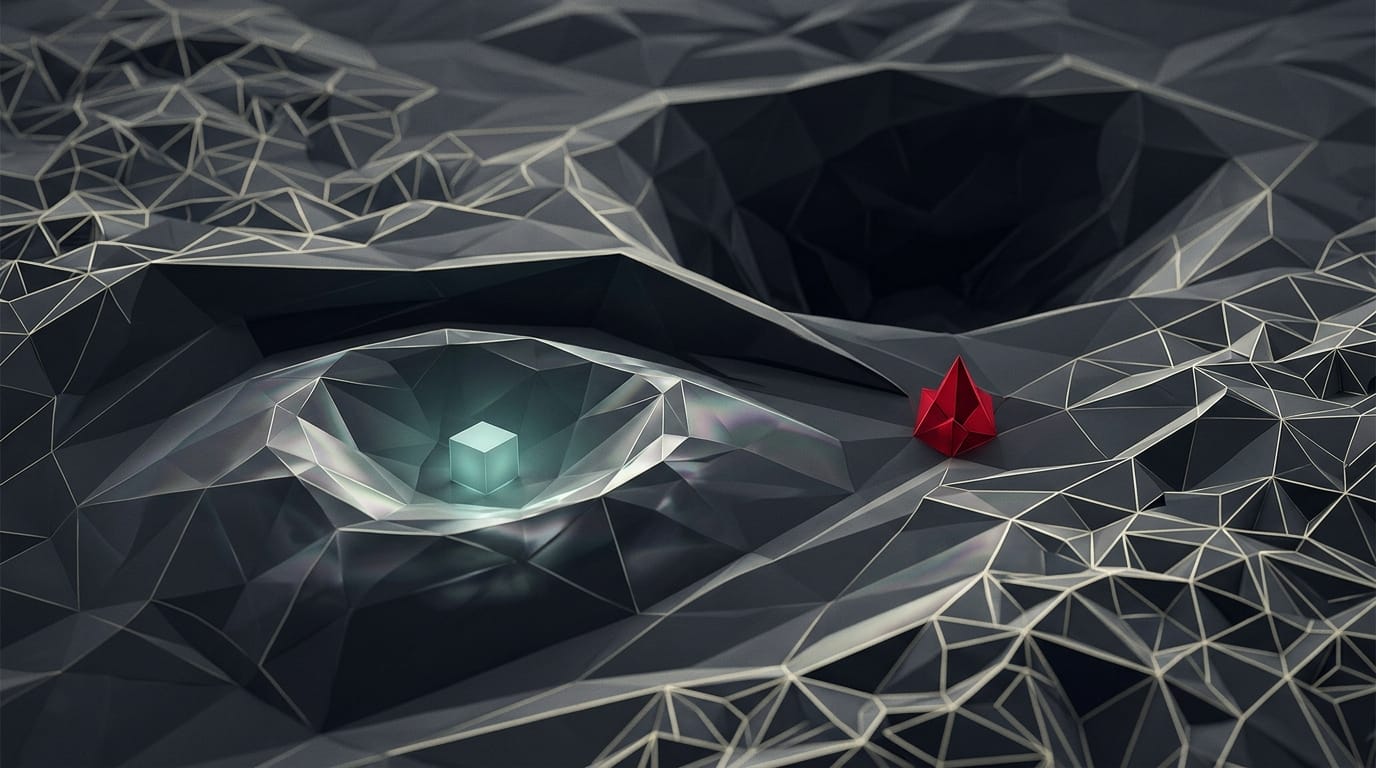
Imagine you are trying to find the quietest, most peaceful spot in a sprawling, bustling city. You’ve got a map, a GPS, and all the latest tech, but your navigation system only understands one instruction: Go downhill. It might guide you straight into a sunken park, a lovely little valley where the noise fades, and you think you’ve found it. However, the real quietest spot, the most peaceful place, might actually be at the top of a completely different hill, across town, or perhaps even in another park entirely. Your "go downhill algorithm would never find it. It's stuck in its local valley, perfectly content, oblivious to the entire range of other possibilities out there.
Apparently, some of our most sophisticated computer programs are in a similar predicament, though with data instead of parks. These algorithms are tasked with exploring vast landscapes of information, finding all the nooks and crannies where important patterns might hide. Designed to “sample” data, these algorithms essentially map out the probability of where different kinds of information show up. It’s the digital equivalent of trying to survey every single animal species in a rainforest, making sure you don't miss the shy, rare ones that only appear in specific, hard-to-reach clearings.
For years, many believed that certain powerful tools, specifically those built on ideas like Wasserstein gradient flows and forward-only diffusion processes, were up to this immense task. These are fancy mathematical ways of saying they're designed to smooth out data, to nudge it gently towards common patterns, much like water flowing downhill to find the lowest point. They are the backbone of many advanced AI applications, from generating realistic images to understanding complex scientific data. The idea was that they could gracefully move through data, exploring all the different "hills and "valleys where information might cluster.
But it turns out this interpretation, while intuitive, is fundamentally misleading. A recent preprint appearing on arXiv by Daniel McBride and colleagues found that these methods, in their standard forms, aren't just a bit slow; they are spectacularly, hopelessly inefficient when dealing with data that has distinct, far-apart clusters. Think of those different peaceful parks across the city. The technical term for this scattered data is "well-separated multimodality," and it presents a problem these algorithms simply can’t seem to solve easily.
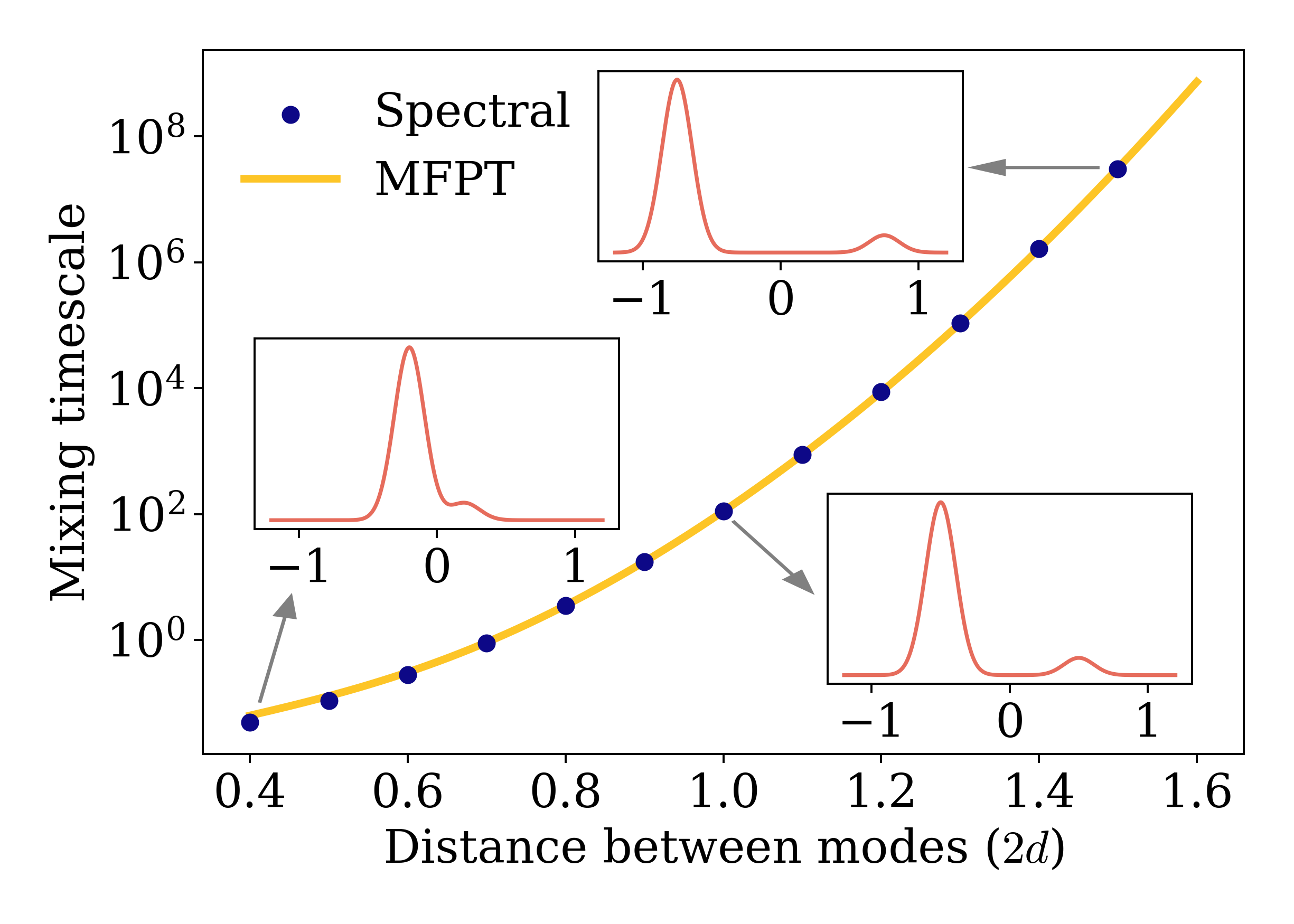
What McBride and his team showed is that these elegant, gradient-driven systems—meaning they only respond to what’s immediately around them, like water only flowing downhill—get stuck. They exhibit what scientists dryly call "metastability and "slow-mixing phenomena." It means the algorithms find one cluster of data, one peaceful park, and settle in. They take an exponentially long time to jump from one cluster to another, to actually explore the full range of possibilities. "Exponentially long in this context is a scientific euphemism for "longer than the universe has existed," "longer than we have patience for," and "probably not happening."
The researchers dug into the underlying mathematics, using advanced techniques like spectral analysis and mean first-passage time analysis. They confirmed that the way these algorithms move data around, the so-called "density evolution," is essentially the same for both Wasserstein gradient flows and a related process called overdamped forward diffusion. This analysis revealed a structural limitation: purely local, gradient-driven transport mechanisms simply require exponentially long times to move data across well-separated clusters. It’s like being a tiny ant trying to cross a vast desert to another oasis; without wings, it’s going to be a very, very slow journey.
You might think, "Well, just give the algorithm a little push, or let it take small steps towards other areas." Scientists have tried this. They use what are called "log-linear annealing schedules," which involve introducing intermediate steps, gradually changing the landscape to help the algorithm explore. It’s like slowly filling the valleys with water until the peaks become islands, hoping the ant might swim. But McBride and his colleagues discovered that even this common approach doesn't eliminate the exponential scaling of the total time it takes to explore everything. The ant still has an impossible distance to swim.
This isn't just an abstract computational curiosity. Identifying rare physical events, like specific particle decays in a massive accelerator or faint signals from cosmic collisions, often means picking out tiny, crucial needles from overwhelming haystacks of data. Those rare signals are the "other peaks in the data landscape. If our AI tools struggle to find them efficiently, we risk missing critical insights that could reshape our understanding of the universe.
So, what does this mean for the future of intelligent machines? It means we can’t keep relying on these algorithms in their current forms for certain complex tasks. The challenge now, the researchers suggest, is to develop entirely new approaches—what they call "fundamentally nonlocal mechanisms—that don't get stuck in the computational equivalent of a comfy armchair. We need algorithms that can somehow perceive the entire landscape at once, that can make bold leaps across valleys without having to slowly trudge through every inch. Perhaps the most profound discoveries will come when our algorithms learn not just to follow the path of least resistance, but to sometimes take an impossible shortcut. ◆
Sourced from: "Wasserstein Gradient Flows and Forward-Only Diffusion Are Not Enough for Multimodal Sampling" by Daniel McBride et al.