

A unique species disappearing from a local ecosystem—perhaps a particular butterfly from a meadow or a specific fish from a river—sends consequences rippling far beyond just that missing creature. These individual losses weaken the entire system, affecting the stability of local food webs, the health of soils, and even the ability of landscapes to provide clean water or resist disease. For communities relying on these natural systems—from farmers to local tourism operators—the long-term impact on their livelihoods and way of life can be profound and irreversible. Understanding which species are most at risk of vanishing from their local habitats is a fundamental challenge, yet predicting these losses has long been like trying to navigate without a map.
Scientists currently face immense difficulty forecasting the local survival of species. Existing tools, often relying on intricate models, demand precise details about how each species lives and moves. Getting that information for hundreds or thousands of different organisms across a complex environment is nearly impossible. Other statistical approaches might offer some insight, but their findings are often too specific to one situation, making them hard to apply broadly. This leaves conservationists and policymakers with a critical blind spot, making it hard to prioritize limited resources and protect the species truly on the edge.
A promising new framework offers a way forward, providing a more reliable compass for navigating this challenge. Davide Bernardi, in a preprint appearing on arXiv, introduces a powerful metric called competitive balance. This isn't just another abstract scientific concept; it’s a measurable quantity designed to cut through the complexity. The competitive balance reveals how susceptible a species is to being pushed out of its environment by competitors—a process known as vulnerability to competitive exclusion. This single metric integrates the most essential factors for a species’ survival: the variety in how it spreads itself across a landscape and the intricate ways it interacts with other species in the community.
The beauty of this new approach is in its practicality. Instead of needing to estimate countless specific traits about each animal or plant—like how fast it reproduces or its exact movement patterns—the competitive balance can be directly inferred from something much simpler to collect: spatial abundance data. This means researchers just need to know where species are found and in what numbers across different locations. Think of it like a community census for plants and animals, documenting who lives where. This practical shift is a game-changer, making it far easier to assess vulnerability in real-world settings, from dense rainforests to expansive grasslands.
Here is why that matters: the framework reveals that a variety in how species spread out, for instance, some individuals staying put while others move far and wide, significantly reduces a species’ vulnerability to being outcompeted. Imagine a species where every individual always stayed in the same small patch. If a new, stronger competitor arrived in that patch, the entire species could be wiped out locally. But if some individuals regularly moved to new areas, even small ones, that species gains a critical buffer. This diversity in movement acts like a dispersed portfolio, making the species more resilient to challenges in any single location. The framework confirmed this insight by successfully analyzing data from real-world tropical and temperate forests, showing its broad applicability.
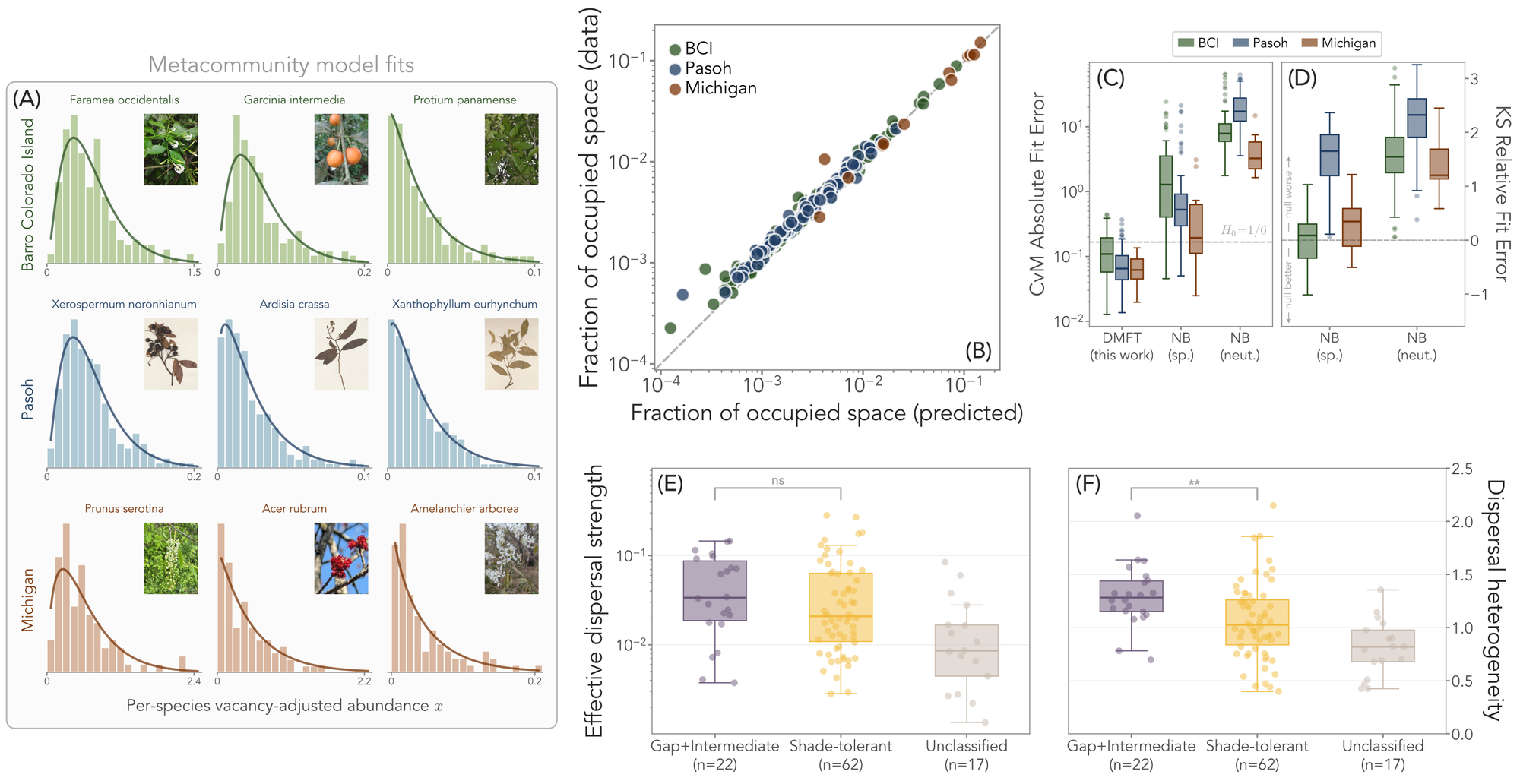
The consequence of this new understanding is immediate and tangible for communities around the world. With a clearer, more practical way to identify species most vulnerable to competitive exclusion, conservation efforts can become far more targeted and effective. Instead of making educated guesses, governments and local groups can use this metric to direct resources to specific species and habitats that are truly on the brink of local disappearance. This could mean dedicating efforts to protect critical dispersal pathways for a specific plant, or managing habitat in a way that supports a broader range of movement strategies for an animal.
This is not about generating alarm, but about equipping us with better tools to make informed choices. The evidence shows that we can now assess species vulnerability with a level of precision that was previously out of reach. The next step is to embrace and apply this framework widely. By collecting and analyzing spatial abundance data in more ecosystems, from our local parks to vast national reserves, we can build a comprehensive understanding of which species are truly at risk and, crucially, understand why. This approach provides a concrete pathway to guide conservation, enabling real actions that protect the ecological balance underpinning our lives and economies. ◆
Sourced from: "Dispersal diversity buffers species vulnerability to local extinction"