
Imagine trying to build the next generation of super-fast computers out of a gossamer-thin sheet of something that dissolves if you so much as breathe on it. That is, apparently, the everyday challenge for scientists dabbling in what we call 2D materials. These are not your grandpa's semiconductors. We are talking about materials so ridiculously thin—often just an atom or two thick—that they possess bizarre, wonderful properties. They could lead to everything from quantum computers to impossibly efficient sensors. There’s just one tiny snag: they are incredibly, almost comically, sensitive. Leave them out in the open air, and they begin to degrade. Oxidize. Essentially, they crumble. It’s like inventing a fantastic new dessert, then discovering it turns to dust if exposed to oxygen. A brilliant new ingredient offers little use if it cannot make the journey from the lab bench to the plate. For years, protecting these delicate wonders has been a frustrating dance. Scientists would try to encase them, wrap them up in other materials, but these solutions often introduced new problems. The protective layers might be too thick, too complex to apply, or they’d simply fail to protect the material for long enough. Sometimes, the act of encasing the material made it almost impossible to actually use it in a device. You want to make an electrical contact? Good luck trying to punch through your carefully constructed shield without damaging the impossibly fragile material underneath. It was a classic "damned if you do, damned if you don't situation for the engineers and physicists.
Then, Gabriel Natale and colleagues, writing in a preprint appearing on arXiv, threw a surprisingly mundane hero into the mix: a special kind of aluminum oxide. Now, "aluminum oxide might sound about as exciting as.well, aluminum oxide. It is the stuff that forms a protective layer on aluminum soda cans, preventing them from corroding. But these researchers weren't just slapping it on with a brush. They were using a method called "electron-beam evaporation," essentially vaporizing aluminum oxide in a vacuum and letting it condense in an ultra-thin, uniform layer.
Think of it like this: if you wanted to protect a very delicate, perfectly flat sugar sculpture from the elements, you wouldn’t just wrap it in cling film and hope for the best. You might, perhaps, gently spray it with a fine, invisible glaze that protects without changing its shape or adding bulk. This electron-beam evaporated aluminum oxide, or AlOx, works much the same way for air-sensitive 2D materials. It acts as an effective, almost imperceptible, shield.
The real trick, the genuine "aha moment, is that this AlOx layer isn't just a protector. It also serves as a direct platform for building devices. This is a big deal. Traditionally, if you encapsulated a material, you then had to somehow get through that protective layer to connect it to the rest of your electronics. This often involved complex etching steps that could damage the underlying material. But with this AlOx method, you can apparently build your electrical contacts right on top of or through the AlOx layer without needing extra steps to carve it away. It eliminates the need for complicated stacking procedures, streamlining the entire fabrication process. Imagine baking a cake, and the frosting itself already has the perfect channels for the sprinkles. It simplifies everything.
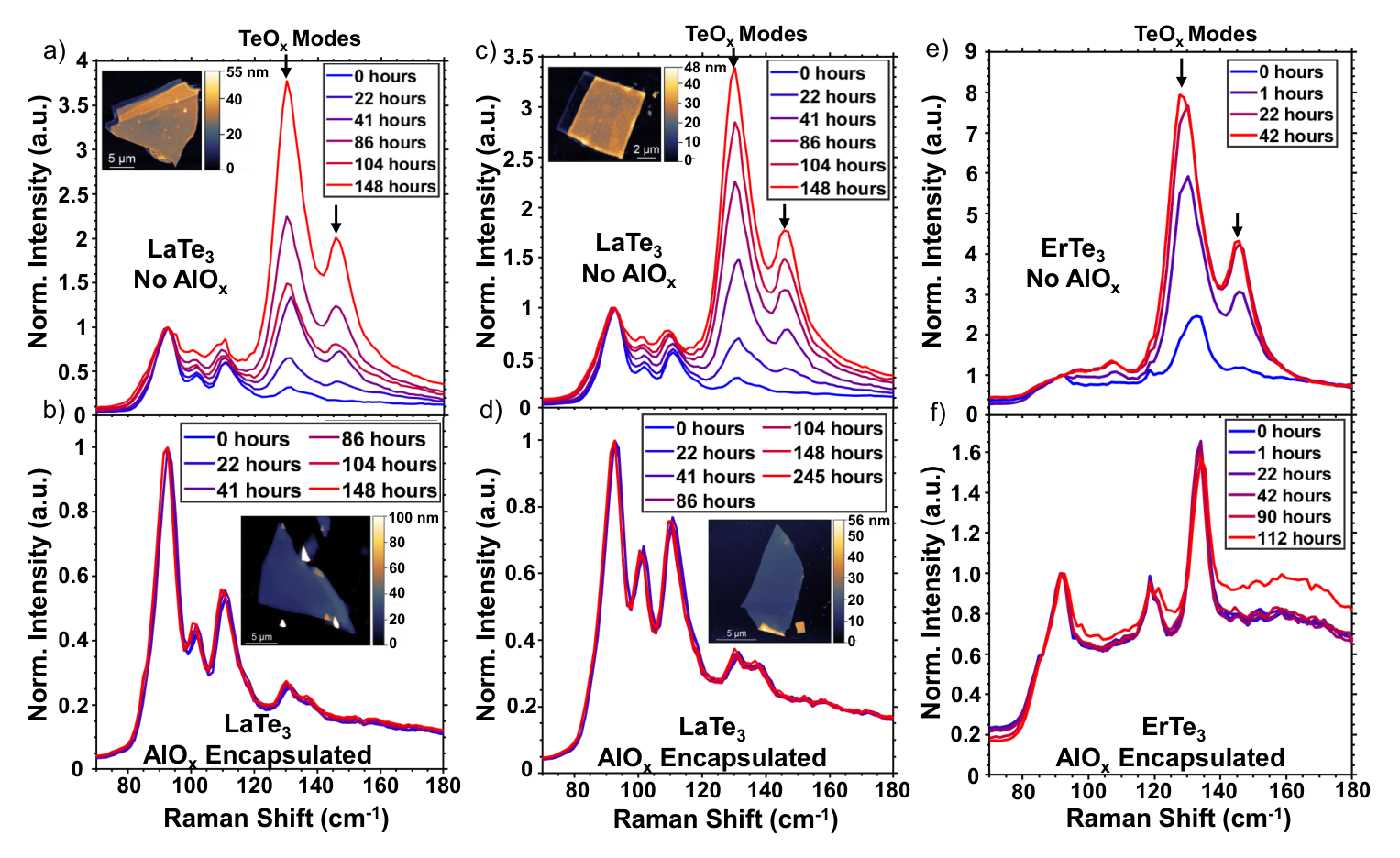
The team put their AlOx shield to the test on a range of air-sensitive 2D materials. They experimented with exotic-sounding semimetallic materials, with superconducting compounds, and even with "rare-earth tritellurides," which sound less like a scientific material and more like an ancient curse. Previous protection methods often stumbled when dealing with thicker flakes of these materials, but the AlOx method worked across various thicknesses. It preserved their fundamental optical and electronic properties, keeping those weird quantum characteristics intact. The process did require some careful tailoring, with optimization needed for different surfaces and flake thicknesses, but the core method remained strong and adaptable.
This development resolves a long-standing challenge. It means scientists can finally build with these extraordinary, fragile quantum materials, bridging the gap between their delicate nature and the rigorous demands of device manufacturing. We are talking about the building blocks of future technologies, unlocked by a whisper-thin layer of a familiar compound. The universe, it seems, constantly presents us with materials that seem to defy physics or common sense, and sometimes, the solution to their most perplexing problems is simply a very precise application of something we barely notice. It is, technically, a very sophisticated coating. But the implications are anything but plain. They point to a future built on materials so fleeting, they require a superhero’s shield made from little more than atoms. ◆
Sourced from: "Scalable, Simple, and Versatile Encapsulation of 2D Materials and Devices" by Gabriel Natale et al.